
Building a wooden house in Lefkada can be a smart decision, but only if you avoid the mistakes that turn a promising project into an expensive lesson. CLT, timber frame and prefab all need serious evaluation before you choose.
If you're early stage, start with the general guide for construction of a wooden house in Lefkada. If you have already decided that you want a wooden house and are looking for the right technology, this article will show you the 7 mistakes that most often lead to expensive and delayed projects.
1Compare only the price per sqm
Quickest pitfall: asking for a "price per square meter" to compare quotes. In a wooden house in Lefkada, this comparison is false. The €/m² does not describe what the offer contains: if it includes a foundation, what is the level of finishes, if there is a moisture envelope design, what roof system, what MEP, what documentation.
Two offers at €1,800/m² can differ by ±40% in actual turnkey total cost. Example: one offer may not include gates and fences, another may not include connection to PPC and water supply, a third may leave "out" the electrical beyond the basic services. Hidden costs are not visible in €/m², they are visible only when there is a detailed scope per work category.
Instead of €/m², ask for a detailed scope. Review the factors shaping the cost of a wooden house in Lefkada and stick to identical offers so you're comparing the same things. If the offer doesn't have a clear "what's included / what's not included" list, it's not ready for comparison.
Conclusion: €/m² comparison without identical scope is not a comparison, it can easily differ by ±40% in actual total cost.
2Consider all wooden houses the same
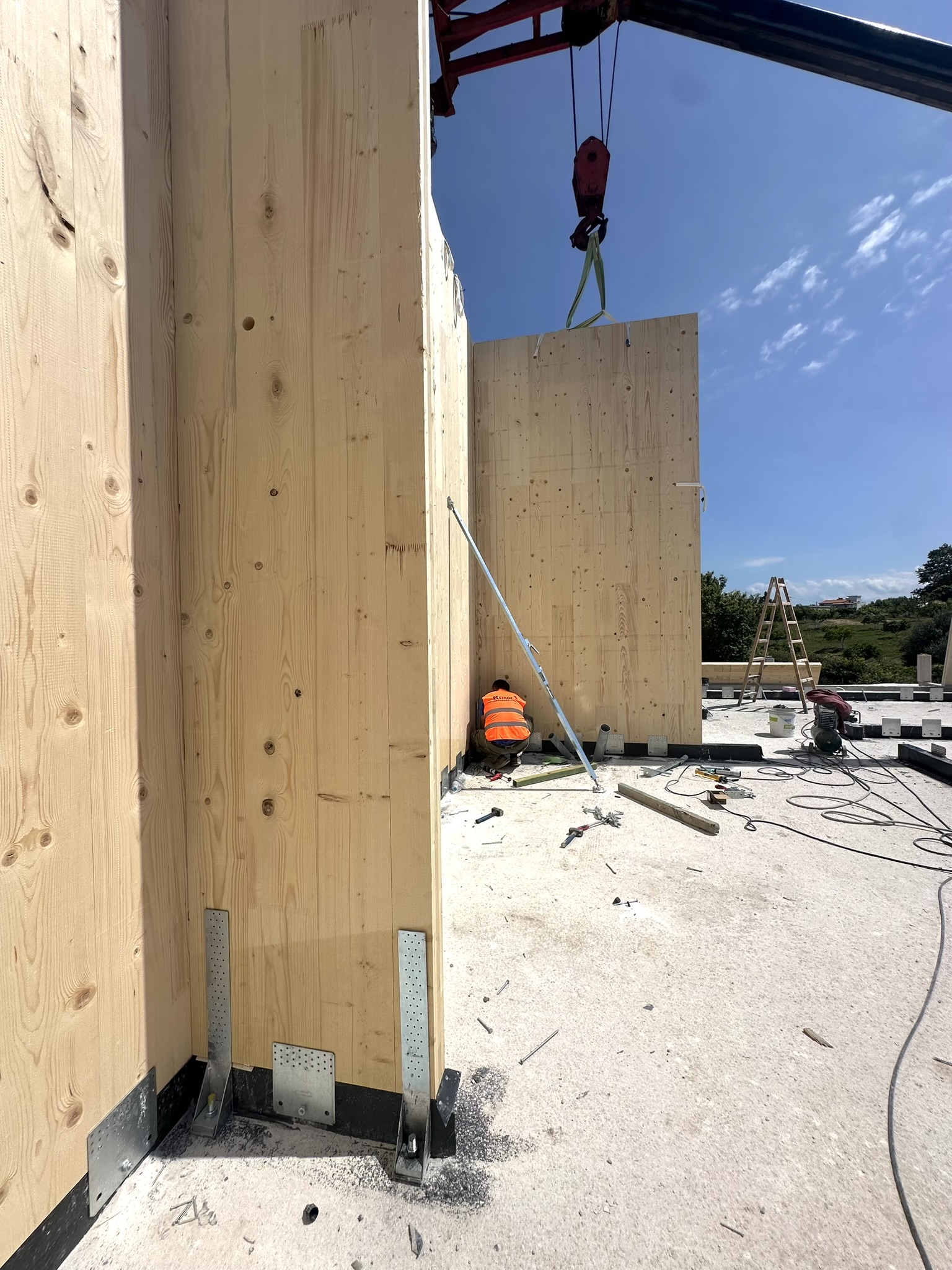
Timber frame, prefab panel and CLT are three completely different construction families. They don't have the same static behavior, the same build speed, the same shell, the same design freedom, or the same documentation. Choosing a "wooden house in general" at the contract stage leads to surprises on the construction site.
Before you decide, see in detail the CLT vs prefab vs timber frame comparison for Lefkada, because the island climate and seismicity punish the wrong choice. The name "wooden" alone does not guarantee either strength or speed, it's the technology that counts.
Conclusion: Timber frame, prefab and CLT are three different construction families with different statics, speed, shell and documentation, the name "timber" doesn't guarantee anything.
3Ignore the seismicity of the Ionian
Lefkada belongs to the highest seismic zone of Greece (Zone III). Many "ready-made" prefabricated wooden houses come from manufacturers working with seismic data of central Europe. That doesn't mean they'll fall over, it just means their engineering documentation isn't tailored to the actual seismic spectrum your home will be called upon to withstand.
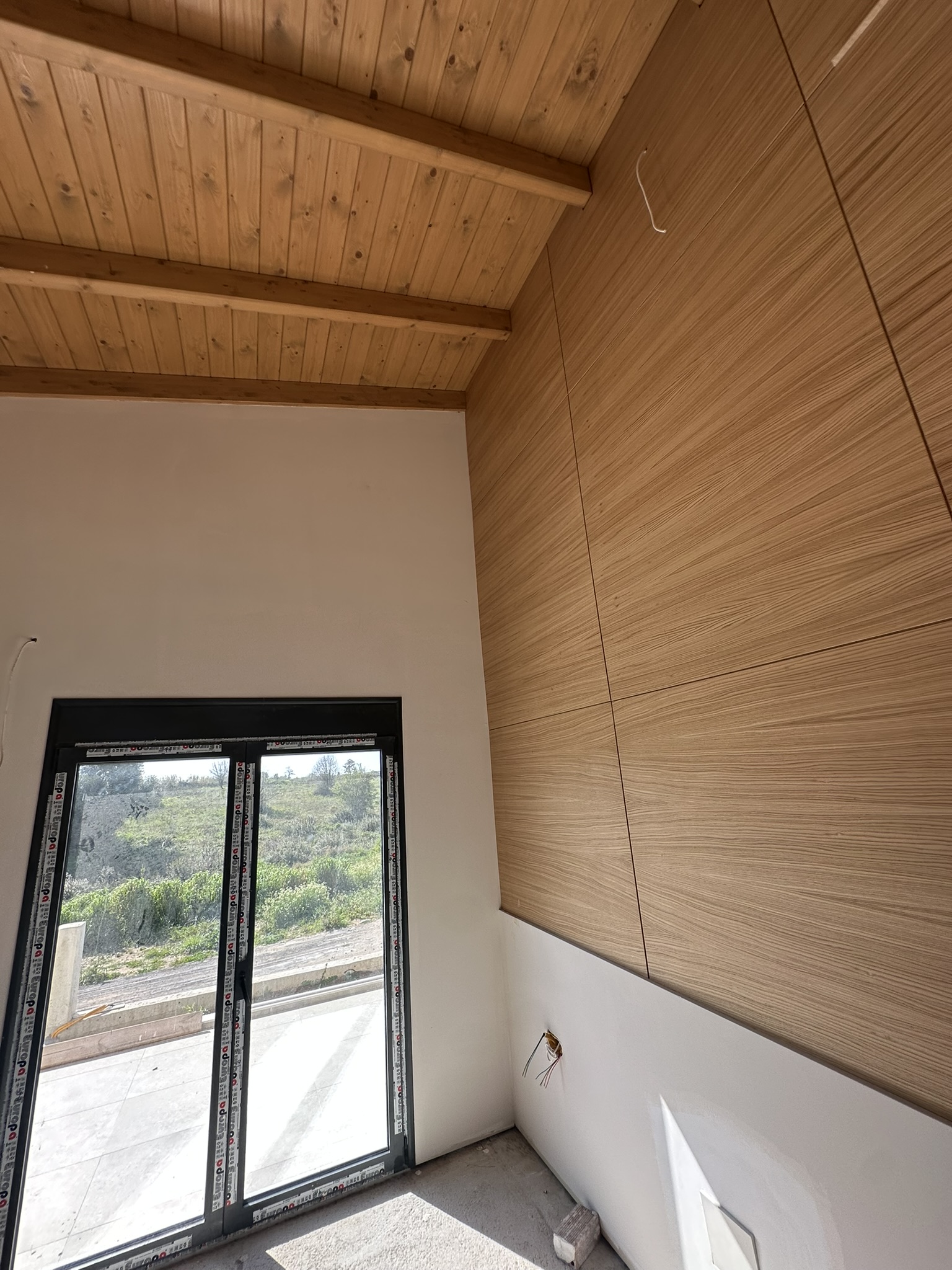
Ask every quote to document this: a structural study with seismic parameters for the specific plot, the type of connections, and the diaphragm action of the floors and roof. In CLT this is standard practice, part of CLT technology is the documentation of the seismic response before the panel arrives on site.
Conclusion: Lefkada is Seismic Zone III, ask for a structural study with an Ionian seismic spectrum, not generic N. European documentation.
4Do not examine moisture, salt and shell
Lefkada has a relative humidity that can stand steadily above 75% in winter, saltiness from the sea and strong north winds. A wooden house that works perfectly in Larissa will not behave the same here without a proper shell layer. Damp isn't just an issue in winter, in coastal areas damp starts to affect materials from early autumn, particularly in timber elements exposed to north faces.
The critical points are: airtightness, open water vapor diffusion in the right direction, waterproofing, ventilated gap behind linings, and thermal bridges. If a listing does not list these four items, it does not have a shell designed for an island climate. Also ask for a reference to the type of membrane (permeable/non-permeable), the water vapor barrier on the right side of the insulation, and lining materials resistant to salt: in the wrong choice of metals or fasteners, oxidation occurs within the first 2 years.
See also how it is treated wooden roof in Lefkada, because 60% of moisture problems start from the roof and its terminations.
Conclusion: Without airtightness, vapor diffusion in the right direction, waterproofing and a vented gap, the shell is not designed for an island climate.
5Don't count access, crane and logistics
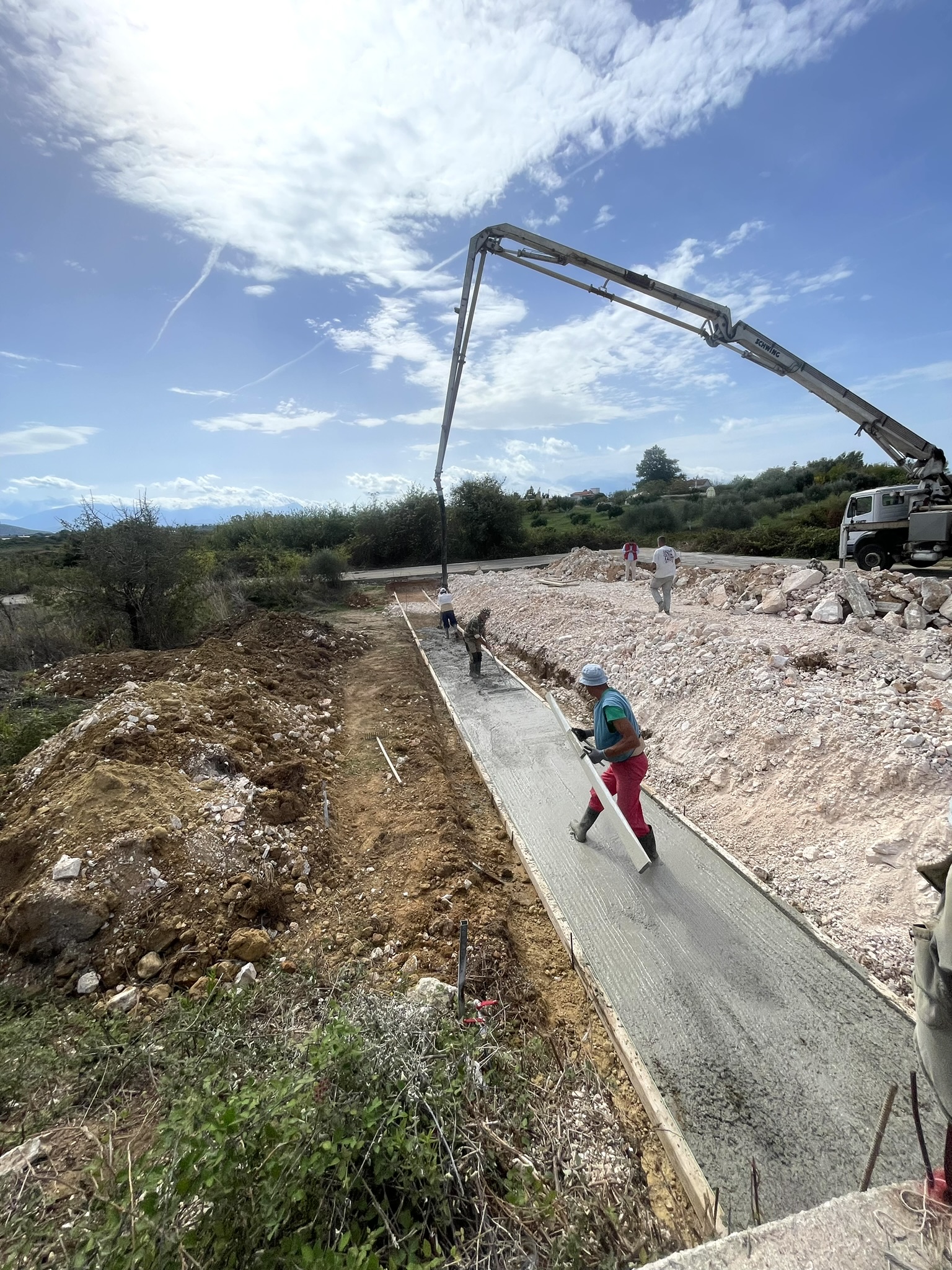
Lefkada is connected to the mainland by a bridge about 50 meters long, not by ferry, as is often assumed. But this does not solve the problems: narrow roads in some settlements, difficulties in accessing sloping plots, seasonality in transport before the tourist season, and limited crane availability.
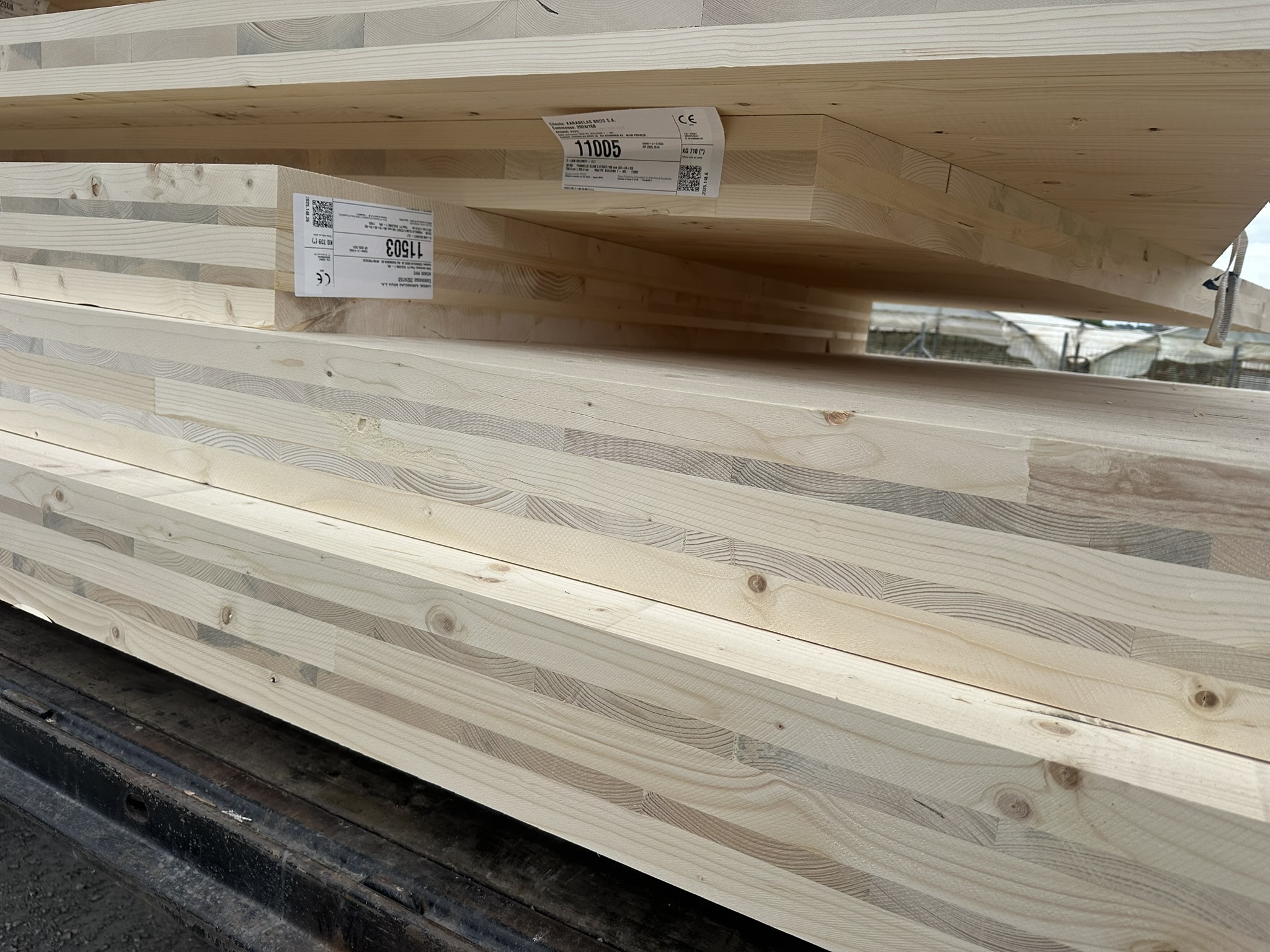
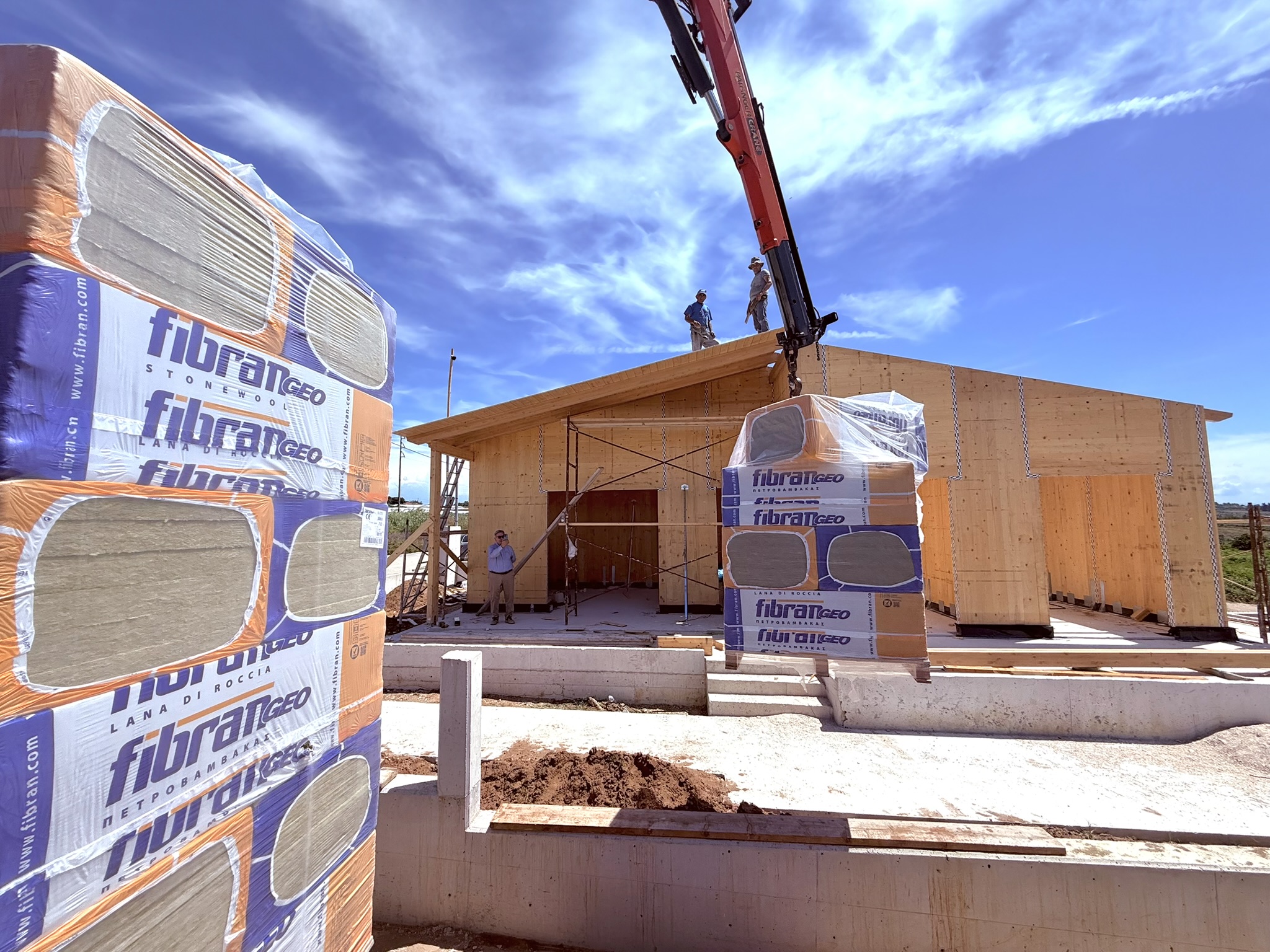
Before any down payment on a system, an engineer must visit the site and confirm: the length and height of the largest truck that can reach it, on-site space for the crane, and the seasonal work windows. This is part of it CLT pre-costing technique and frequently changes system selection.
Conclusion: Before any deposit, an engineer must confirm on site: maximum truck length, crane space and seasonal work windows.
Don't have a technical assessment for your plot yet?
15 minutes, no obligation. We send you what the plot requires, what system fits and what the realistic sequence of actions is.
Request technical pre-costing →6See the roof as a simple detail
The roof is what saves or ruins a wooden house in Lefkada. It has to cope with heavy rainfall, salt, UV radiation, north winds and earthquakes. If treated as a "tile or sheet metal" decorative option, problems appear in the second winter.
What to look for: roof ventilation (not a sealed build-up), insulation of the appropriate type and thickness, proper terminations at the edges, and seismic bracing. At traditional wooden house in Lefkada with a tile roof, this balance is even more important, because the weight of the tile roof changes the seismic response. See the solutions on the page roofs and tiled roofs.
Conclusion: The roof defines 60% of moisture problems, roof ventilation, proper insulation and seismic bracing are not details.
7Ask for a quote without a clear scope
The biggest source of cost and time overruns in wood projects in Lefkada is not earthquake or moisture, it's that the owner asked for a quote without deciding what the actual scope is. "House 120 sqm in Lefkada" is not a scope, it's an idea. Two contractors might imagine two completely different houses with this description: one with basic finishes and a simple shell, the other with premium architecture and an energy shell. In the second case the price might be twice that, and neither is "expensive," they're just talking about different houses.
Before requesting a binding price, you need: survey, architectural draft, list of finishes, construction system (CLT / prefab / timber frame), MEP level, roof type, topographical access. When these exist, offers can be compared. The technical pre-costing exists for just that: to lock the scope before any money is on the table.
Rule of thumb: if you can't explain in two sentences exactly what you want the contractor to deliver (system, level, what's included), you're not ready to bid yet. This is not a weakness, it is the normal stage before studying. Those who go into offers "to see numbers" end up redoing the process 3 and 4 times, with accumulated changes and frustrations on all sides.
Conclusion: "House 120 sqm in Lefkada" is not a scope, it's an idea. Without detailed scope (system, finishes, MEP, roof), the offer comparison is false.
Before you decide, start with a proper technical assessment
If you are seriously thinking about building a wooden house in Lefkada, the first step is not a general price. It is the technical assessment of the plot, scope, access, construction system and level of delivery. This assessment usually saves more than it costs, because it prevents the 7 mistakes above before they become irreversible.
What does the right first phase include: site visit, crane and truck access control, clear urban planning data, initial architectural sketch, system selection (CLT / pre-cast / timber frame) with documented reason, realistic schedule based on opening season, and draft budget with ±15% margin. This data is enough to decide whether to proceed or not, without committing to a contractor.
If you want to see how CLT works in practice in an island environment, take a look at our projects in the Ionian and on 4 construction phases who organize a project from study to turnkey. For a traditional stone and tiled style in island architecture, see also the page for traditional wooden house in Lefkada. Whichever direction you choose, the correct order remains the same: evaluation first, decisions second, offers third.